
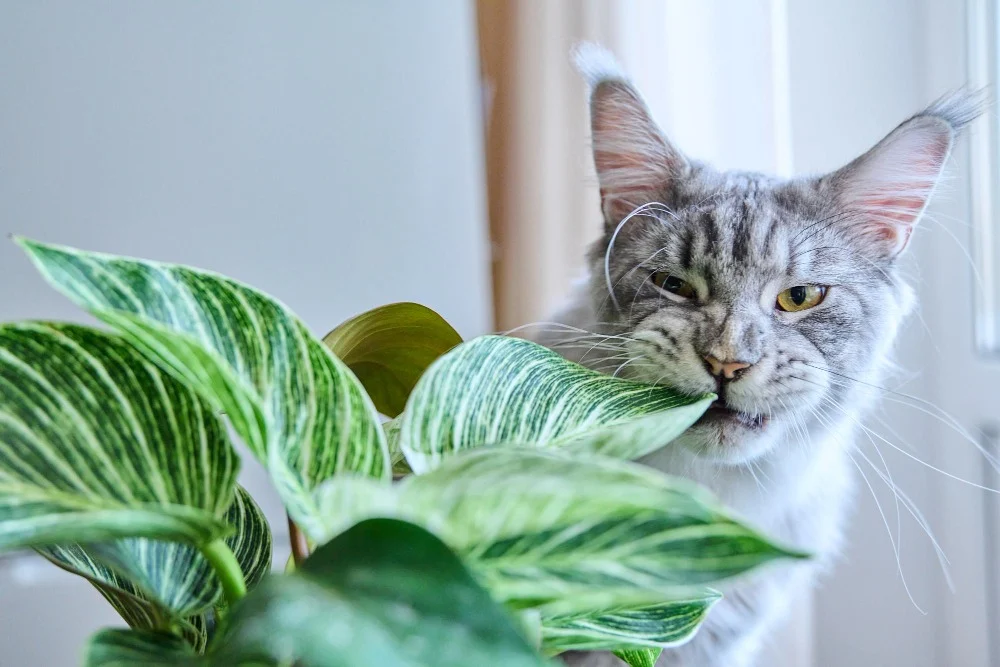
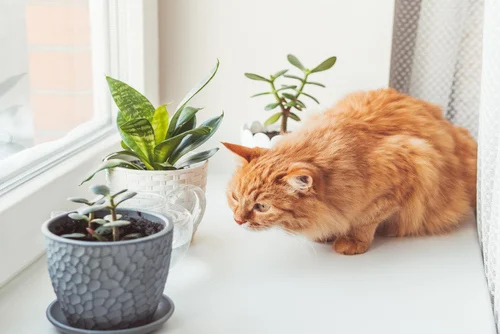
Gardeners with a piece of green heaven inside the house and a cat always struggle. The most common experience is being emotionally hit by seeing the devastating condition of their favorite houseplants. The most common sights are split leaves, damaged bodies, struggling standing conditions, several sporting jagged bite marks, soil mix outside the pot, and so on.
If you can relate to this, you must agree that your worrying context concerns not only the damaged indoor plants and aesthetics of the house but also the cat’s health. Various indoor plants, such as lilies, aloe vera, etc., are toxic to cats, and any contact with them can trigger cat health issues.
So, how to stop your cat from eating your house plants? Well, in this article, I am going to provide you 5 ways to do that. Let’s start.
Understanding the Cat’s Interaction With Houseplants
I think before knowing the processes to stop your cat from eating the houseplants, you should understand the reasons behind the cat’s behavior.
Why Cats Eat Houseplants
- The leaves’ texture, scents, and movement entice your cat, encouraging it to play with the houseplant. While playing, the cat sniffs, scratches, and sometimes chews the leaves.
- Cats are naturally highly curious. Because of this, your cat can test the house plant by extracting and chewing the leaves, branches, etc.
- In the wild, cats eat grass to expel indigestible items from their stomachs. Your pet cat can mimic this instinctual behavior by eating houseplants.
- If your cat does not have enough toys and interacting items, it can find the houseplants interesting to interact. Here, the cat eats the plant parts.
- Your cat simply likes the taste of the houseplant and eats that.
Risks Associated With Cat Eating Houseplants
The following are the risks associated with cat-eating houseplants.
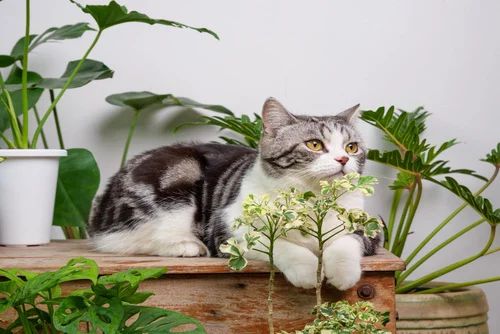
Poisoning
Many houseplants contain substances that are toxic to cats. So, if your houseplants fall into this category and your cat eats those plants’ leaves or parts, there is a huge chance that the cat will face health challenges.
In such a case, your cat can face the below-lised issues.
- Vomiting
- Diarrhoea
- Difficult breathing
- Kidney issue
- Seizures, and so on.
Gastrointestinal Issues
It is certain that a cat’s digestive system is not compatible with consumed plants. If your cat consumes a large quantity of houseplants, its digestive system will encounter problems digesting the green things.
Following this, it can experience gastrointestinal upsets, which eventually result in vomiting, constipation, or diarrhoea.
Chocking
Chocking a crucial risk if your cat frequently eats houseplants. If the cat tries to eat a large plant, it can trigger a choking hazard, which can even result in the cat’s death.
Behavioral Problems
If your cat becomes habituated to eating houseplants, it is literally a tough habit to break down. Also, you are keen to save the plants.
The whole situation will inherit a conflict between you and your cat, which is not good at all. The conflict generates frustration for both parties.
5 Ways to Stop Your Cat Eating Your Houseplants
The following are the elaborations on the ways to restrict your cat from eating the houseplants.
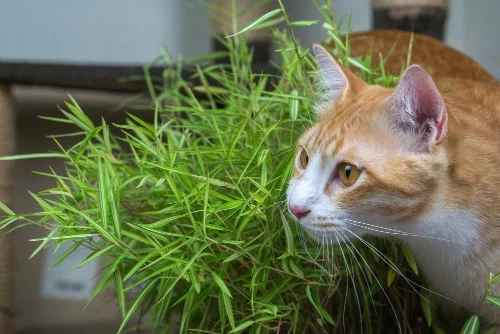
Incorporating Cat Grass Inside the House
The first approach to stop your cat from eating the houseplants is bringing cat grass into your house. This grass type is specially grown for cat consumption.
Placing this grass at accessible locations in your house will allow the cat to meet its requirements of interacting with green and live elements, i.e. the houseplants.
The cat will play and chew the grass, leaving your indoor plants safe. Additionally, this cat-friendly grass also provides some micronutrients like vitamin A and vitamin D.
I have two recommendations for you in this case.
- Do not purchase a bunch of cat grass at a time. In a single time, purchase only one or two.
- Try your best to provide fresh cat grass to your furry friend.
Make Your Plants Unappetizing
It is a lucrative and low-cost solution to stop your cat from eating the houseplants. In this case, you use various materials and substances to keep the cat away from the plants. Multiple solutions are described below.
Use of Citrus Scents
Cats dislike the smell of citruses. Following this characteristics, you can place some peel of lemon or other citrus around the plants. The circulated smell will keep the cat away. In this case, I forbid you use concentrated citrus oil as it has negative impact on cat’s health.
Use of Coffee Ground
You can also use coffee grounds as a natural deterrent to prevent your cat from eating the houseplants. Just sprinkle the coffee ground at the base of the plant.
Use of Vinegar Solution
Purchase vinegar and mix that with fresh water in a spray bottle. Then, spray the solution on the houseplants. The circulated smell will force the cat to maintain distance from the indoor plants.
Use of Commercial Items
Various commercially produced repellents are available in the market that are highly capable of saving your plants from the cat’s eating.
The most popular ones are bitter apple spray, garlic spray, plant-friendly hanging soap, and motion-activated air blasters.
Create Physical Barrier
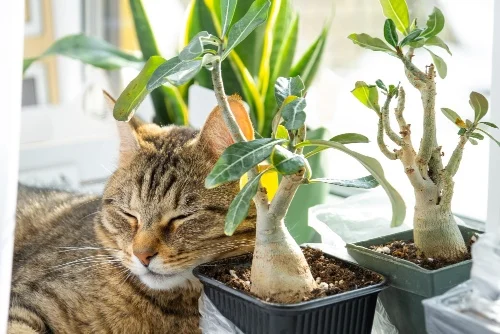
By creating physical barriers around the houseplants, you can restrict your furry friend from eating them. To create the barrier, you can use pebbles, stone chips, or pinecones. Place these materials around the plant bases scatteredly.
Your cat will feel uncomfortable while trying to reach the plant, and its plant-eating habit will disappear due to this discouraging structure.
Again, you can use chicken wire to protect the house plant from your cat. Chicken wire does not injure the cat physically, but it discourages the cat from using its paws and mouth to interact with the plants.
Redesigning the Houseplant Placing
If none of the above solutions suits you, I suggest you redesign the houseplants’ positioning to prevent your cat from eating them. In this case, you can hang the plants or place them on shelves.
The respective heights of the plants’ positions will discourage the cat from reaching them, and your indoor plants will remain safe. You can enhance this solution’s effectiveness by introducing other interacting elements to your cat, which will keep it busy and make it forget the plants.
Positive Reinforcement and Training
Positive behavioral reinforcement is also a good solution to restrict your cat from eating the house plants. Whenever your cat shows signs of interacting with the indoor plants, you have to distract it by giving rewards or treats.
Following this, a continuous rewarding process will train the cat not to interact with the plants. Also, you will be able to find several cat training facilities in your localities, and you can get their help to train your furry friend.
However, this approach is associated with some costs.
Must-consider Matters While Stopping Your Cat Eating Indoor Plants
- You must ensure that your approach is not harmful to the cat.
- One method will not be effective. I suggest you use two or three methods.
- If you want to use behavior reinforcement for your cat by yourself, you must learn the basics by consulting professionals and using the Internet.
- Make sure the protective measures do not impose any harm on your children (if any).
- Ensure that the selected diet for the cat is nutrient-sufficient.
Final Words
I expect you will find my guide on how to stop your cat from eating your houseplants helpful. It would be better if you could incorporate multiple approaches from the five listed approaches. Also, before applying any approach, you must consider possible issues and problems.
Finally, even if, after trying all the mentioned ways, your cat consistently eats the houseplants, you must consult the vet. There is a huge possibility that your cat inherits an exceptional dietary habit, making it eat plants to get nutrients.